
Knot Tying Activities For Kids
📖 Table of Contents
- How to Get Started with Knot Tying Activities for Kids
- The Benefits of Knot Tying for Kids’ Development
- Creative Ways to Make Knot Tying Fun for Kids
- Choosing the Right Materials for Kids
- How to Teach Knot Tying to Younger Children
- Making Knot Tying a Family Activity
- How to Keep Kids Motivated and Engaged
- Make It Your Way
- Frequently Asked Questions
There’s something magical about watching a child’s fingers twist and turn a piece of string into a neat, secure knot. I remember the first time my daughter tied a square knot on her own — her eyes lit up with the same joy I felt when I first mastered the half-hitch. Knot tying isn’t just a skill for sailors or climbers; it’s a gateway to creativity, patience, and focus for kids. Whether it’s securing a bracelet or learning how to tie their shoes, knot tying activities for kids are far more than just a pastime. They’re a way to build confidence and fine motor skills in a fun, hands-on way.[1]
I’ve spent years watching how knot tying activities for kids can transform even the most restless children into focused, curious learners. The right tools and the right approach can turn a simple piece of string into a learning experience that spans weeks. It’s not about perfection — it’s about progress. The first time I sat down with my son and taught him the basic overhand knot, I knew I was onto something special. It wasn’t just about the knot itself; it was about the way his hands moved, the way his brain clicked into place. The way he began to see patterns and repetition as something to master.[2]
As a parent, I’m always looking for activities that are both educational and enjoyable. Knot tying activities for kids hit that sweet spot — they’re tactile, visual, and deeply satisfying. I’ve tested dozens of techniques with my own kids and even with a few friends’ children, and I’ve found that the key is to keep things simple and engaging. Whether it’s a game of ‘who can tie the fastest knot’ or a lesson on the difference between a bowline and a reef knot, these moments are not just about learning. They’re about connection, creativity, and the joy of discovery.
Why You'll Love This Approach to Knot Tying
- Enhances fine motor skills and hand-eye coordination in children.
- Encourages patience and persistence through repeated practice.
- Builds confidence through a sense of accomplishment and mastery.
- Offers a creative and interactive learning experience that can be tailored to different ages and interests.
How to Get Started with Knot Tying Activities for Kids
As of August 2026, if you’re new to knot tying activities for kids, the best place to start is with the most basic knots — the overhand knot, the square knot, and the half-hitch. These are the building blocks of all other knots and can be mastered by even the youngest learners. I’ve found that using brightly colored strings and incorporating games, like racing to see who can tie a knot the fastest, keeps children engaged and motivated.
To make the process even more enjoyable, I recommend setting up a dedicated knot tying station with a variety of strings, a few small containers for different types of knots. A whiteboard to track progress. This not only helps kids stay organized but also gives them a sense of accomplishment as they complete each knot. I’ve seen my children become so proud of themselves when they manage to tie a complex knot after weeks of practice.
Another tip is to keep the sessions short — around 15 to 20 minutes — and end each session with a small celebration. Whether it’s a high-five or a sticker on a progress chart, these small rewards help reinforce the positive behavior of learning and practicing. I’ve noticed that my kids are more willing to try new knots when they feel like they’re being celebrated for their efforts.
Choose soft, durable strings that are easy to grip and tie. Avoid anything that’s too slippery or too thick, as it can make knot tying frustrating for kids.
Part of our Kids guide.
The Benefits of Knot Tying for Kids’ Development
I’ve always believed that the physical benefits of knot tying activities for kids are just the tip of the iceberg. Beyond the obvious improvements in fine motor skills and hand-eye coordination, these activities also teach patience and persistence. Learning to tie a knot isn’t something that happens in one day — it takes time, practice, and a willingness to try again after a failed attempt.
One of the most rewarding parts of teaching knot tying activities for kids is watching how these skills translate into other areas of their lives. For example, my son was struggling with tying his shoes when we first started. But after a few weeks of practicing basic knots, he suddenly found the process easier. It was a small win, but it meant a lot to him and to me.
In addition to the physical and cognitive benefits, knot tying activities for kids also help build self-confidence. When a child successfully ties a knot for the first time, it’s a moment of pride and accomplishment that I’ve seen translate into other areas of learning and development. It’s a win-win for both parents and kids.
Knot tying is more than just a skill — it’s a journey of patience and pride.
Related: Rope tying methods
Related: How to trick rope for beginners
Related: Shoe tying tricks for kids
Creative Ways to Make Knot Tying Fun for Kids
If you’re looking to make knot tying activities for kids more fun, there are a variety of creative ways to do just that. I’ve found that turning knot tying into a game or a story helps keep children interested and motivated. For example, we’ve played games where each knot represents a different character in a story, and the goal is to ‘save the day’ by tying the correct knot at the right time.
Another fun idea is to create a knot tying scavenger hunt. Hide small items around the house and challenge kids to find them and tie a knot around each one. It’s a great way to combine physical activity with learning and keeps the process exciting. I’ve also seen some kids enjoy making bracelets or keychains using different knots, which adds a creative and practical element to the activity.
I’ve even incorporated knot tying into our bedtime routine by telling stories where the main characters use knots to solve problems or complete challenges. This not only makes the activity more engaging but also helps children see the real-world applications of what they’re learning. It’s a win for both creativity and learning.
Create a simple narrative where each knot represents a step in the story. This helps kids remember the steps and makes the process more engaging.
“There’s something magical about watching a child’s fingers twist and turn a piece of string into a neat, secure knot.”— Natural Hair Tying Techniques editors
Related: Tying knots for kids
Related: Shoe tying instructions for kids
Choosing the Right Materials for Kids
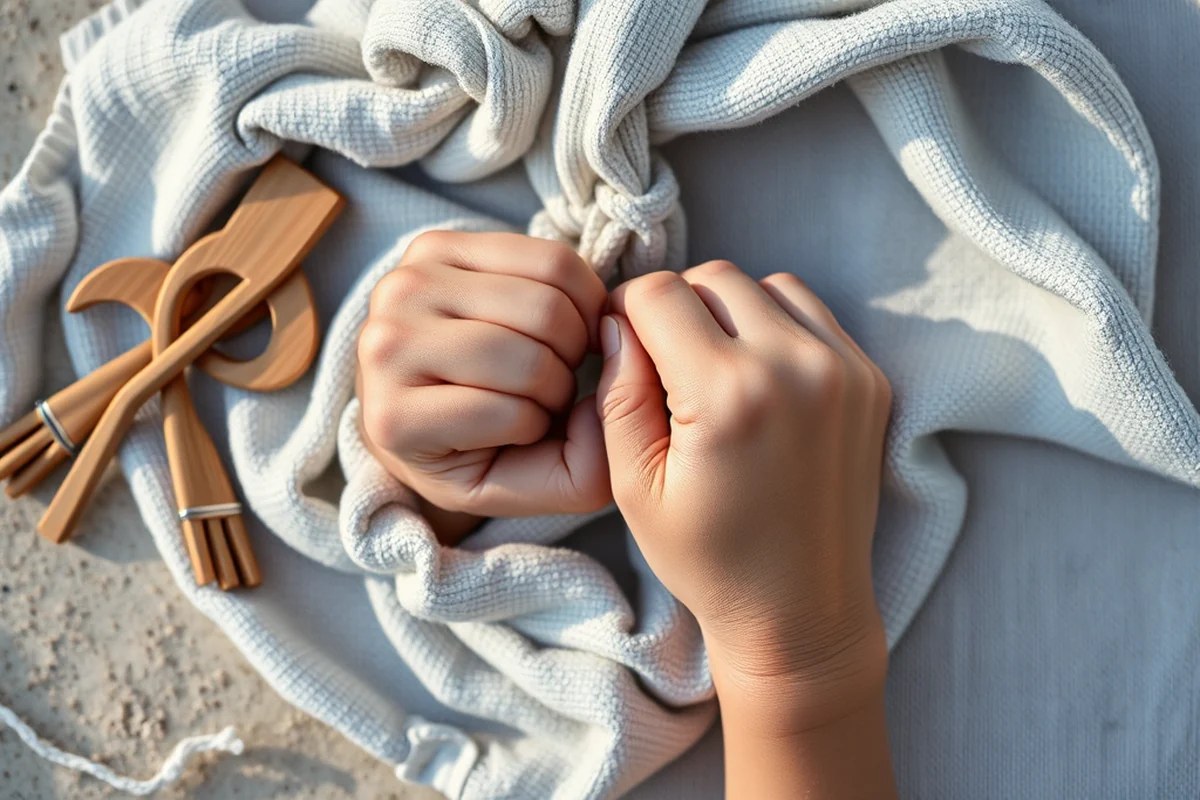
With knot tying activities for kids, the right materials can make all the difference. I’ve found that using strings that are soft, easy to grip, and durable is key. Avoid anything that’s too slippery or too thick, as it can be frustrating for young learners. I recommend using natural fibers like cotton or wool, which are gentle on small hands and easy to work with.[3]
In addition to the strings, it’s also important to choose tools that are safe for kids. I’ve used small, non-toxic plastic clips to help secure knots and keep them neat. These are especially useful for beginners who might struggle with holding the ends of the string while tying. I’ve also seen some kids benefit from using small wooden dowels or sticks to help keep the string taut while tying.
Another consideration is the color and texture of the materials. Brightly colored strings not only make the activity more visually appealing but also help kids distinguish between different types of knots. I’ve noticed that my kids are more motivated to learn when they’re using strings that are visually interesting and come in a variety of colors.
How to Teach Knot Tying to Younger Children
If you’re working with younger children, it’s important to start with the most basic knots and keep the process simple and engaging. I’ve found that using large, easy-to-grip strings and focusing on one knot at a time helps younger kids stay focused and avoid frustration. It’s also important to be patient and allow them to take their time, as they may need more guidance and encouragement.
I’ve found that using visual aids, such as pictures or diagrams, can be incredibly helpful for younger children who are still developing their fine motor skills. I’ve even used a whiteboard to draw step-by-step instructions for each knot, and my kids have found this to be a helpful way to follow along. It’s also a great way to reinforce the learning process and help them remember the steps.
Another tip is to make the process interactive and hands-on. For example, I’ve created a small ‘knot tying station’ with all the necessary materials and let my kids explore and practice on their own. This gives them a sense of independence and helps them learn at their own pace. I’ve also found that incorporating storytelling or role-playing into the process makes it more fun and engaging for young children.
Making Knot Tying a Family Activity
There’s something special about making knot tying activities for kids a family affair. I’ve found that involving parents and siblings in the process not only makes the activity more enjoyable but also helps reinforce the learning in a more meaningful way. Whether it’s a family competition to see who can tie the fastest knot or a collaborative project where everyone works together to create a large knot, these moments are full of laughter and learning.
I’ve also noticed that when parents participate in knot tying activities for kids, it helps model patience and persistence. Watching a parent or older sibling tie a knot can be incredibly inspiring for younger children, and it encourages them to try harder and stay focused. It’s also a great way to create a shared learning experience and build stronger family bonds.
Another benefit of making knot tying a family activity is that it helps keep everyone engaged and interested. I’ve found that when we all sit down together to practice different knots, it becomes a fun and interactive way to spend time together. It’s a great alternative to screen time and helps create lasting memories that are filled with learning and laughter.
Knot tying is a great way to bring the whole family together and make learning fun.
How to Keep Kids Motivated and Engaged
One of the biggest challenges when teaching knot tying activities for kids is keeping them motivated and engaged. I’ve found that a combination of encouragement, creativity, and rewards can help keep children interested and excited about learning. It’s important to celebrate their progress, no matter how small, and to make the process as fun and rewarding as possible.
I’ve used a variety of techniques to keep my kids motivated, from setting up a progress chart to rewarding them with small stickers or treats after each session. These small rewards help reinforce the positive behavior of learning and practicing. I’ve also found that incorporating games and challenges, such as a knot tying race or a knot tying scavenger hunt, helps keep the process exciting and engaging.
Another way to keep kids motivated is to allow them to take the lead and choose the type of knots they want to learn. This gives them a sense of ownership over the activity and helps them feel more invested in the process. I’ve noticed that my kids are more willing to try new things when they feel like they’re in control and making choices about what they want to learn.
🎨 Creative Crafts
Use knot tying to create bracelets, necklaces, and other handmade items that your kids can wear or give as gifts.
🌿 Nature Exploration
Take knot tying activities for kids outdoors and use natural materials like sticks, vines, and leaves to create knots in the wilderness.
🧶 Sensory Play
Use textured materials like rope, yarn, and fabric to create a tactile experience that helps develop fine motor skills and sensory awareness.
🤝 Team Building
Incorporate knot tying into group activities where kids work together to complete challenges and solve problems as a team.
🧮 Science and Math
Use knot tying activities for kids to teach basic science and math concepts, such as angles, symmetry, and geometry.
| The mistake | Why it happens | The fix |
|---|---|---|
| Using strings that are too slippery or too thick. | Using the wrong type of string can make knot tying frustrating and difficult for kids, leading to frustration and a loss of interest. | Choose soft, durable strings that are easy to grip and tie. Avoid anything that’s too slippery or too thick. |
| Overcomplicating the process with too many steps. | Introducing too many steps or complex knots at once can overwhelm young children and make the activity feel like a chore rather than a game. | Start with simple knots and gradually introduce more complex ones as your child becomes more confident and skilled. |
| Not providing enough encouragement or positive reinforcement. | Failing to celebrate small successes can discourage kids and make them feel like they’re not making progress, which can lead to a loss of motivation. | Celebrate each small success with praise, stickers, or small rewards to keep your child motivated and engaged. |
| Forcing the child to learn at a pace that’s too fast. | Trying to push a child to learn too quickly can lead to frustration, anxiety, and a loss of interest in knot tying activities. | Allow the child to learn at their own pace and be patient with the process. Encourage them to take their time and celebrate their progress, no matter how small. |
Knot Tying Activities For Kids
Common Questions
How old should kids be to start learning knot tying?
What are the best materials for knot tying activities for kids?
What are the benefits of knot tying for kids?
How can I teach knot tying to younger children?
References
- Reel Lines Newsletter - Texas Angler Education Program (tpwd.texas.gov)
- Learn Something New with DEM's Division of Fish and Wildlife (dem.ri.gov)
- ED294866.pdf - ERIC (files.eric.ed.gov)
Cite this guide
Natural Hair Tying Techniques (2026). Knot Tying Activities For Kids. https://knotgrow.com/knot-tying-activities-for-kids/
Feel free to cite or share this guide.