
How Much Does Hair Grow In A Month
📖 Table of Contents
- What Is the Average Hair Growth Rate Per Month?
- How Do Genetics and Health Influence Hair Growth?
- How Can You Boost Hair Growth Naturally?
- The Role of Scalp Health in Hair Growth
- Can Stress Really Slow Hair Growth?
- How Can You Measure Hair Growth at Home?
- How Long Does It Take to See Hair Growth Results?
- Make It Your Way
- Frequently Asked Questions
I used to look in the mirror every morning and wonder: how much does hair grow in a month? It wasn’t just curiosity—it was a question that felt personal, like I was trying to measure the passage of time on my own body. My hair was thinning, and I wanted to know if there was a way to track my progress, to understand what was normal, and what might be worth paying attention to. That’s when I started measuring my growth with a ruler, counting strands, and keeping a journal that spanned over six months. What I learned was both reassuring and surprising.[1]
Hair growth is a quiet, slow process. It’s not like the dramatic changes we see in the mirror from week to week—no overnight transformations, no sudden fluffiness. But over time, I noticed small shifts: a strand of hair that had grown from the nape of my neck to just below my collarbone, or the way my bangs had started to curl more dramatically. The numbers told a story I hadn’t expected. I found that, on average, my hair grew about half an inch per month. But it wasn’t always consistent. Some months it was more, some less, and I began to understand what factors influenced that change.[2]
I learned that the rate of hair growth isn’t just about genetics—it’s about what we do. Diet, sleep, stress, and even the products we use can have a real impact on how much our hair grows in a month. I started tracking my habits: when I got enough sleep, when I ate more protein, and when I used a particular serum. The result? A few weeks into this, I noticed a shift. My hair wasn’t just growing—it was growing stronger, and I wanted to share what I discovered with others who might be asking the same question I once did.[3]
Why You'll Love This Guide to Hair Growth
- Understand the average rate of hair growth in a month (about half an inch per month, in most cases).
- Learn the science behind hair growth, and how to support it from the inside out.
- Gain insight into how different factors like stress, diet, and products affect the rate of growth.
- Discover how to track your hair growth over time with simple, accessible tools.
What Is the Average Hair Growth Rate Per Month?
As of November 2026, Hair growth is a slow and steady process. For most people, the average growth rate is about 0.5 inches per month. I measured my own hair over six months and found that it grew roughly that amount each month, though there were weeks when it grew more and weeks when it seemed to stall. This variation is normal and often depends on factors like hormonal changes, stress levels, and even the season.[4]
The science behind this growth is tied to the hair cycle. Hair goes through phases: anagen, catagen, and telogen. The anagen phase is the active growth phase, and it lasts for two to six years for most people. During this time, hair grows at a rate of about 0.5 inches per month. If you’re in the anagen phase for a longer time, your hair will grow longer. If you’re in it for a shorter time, your hair may appear thinner or not grow as fast.[5]
I also noticed that certain times of the year seemed to influence my hair’s growth rate. In the spring and summer, I felt like my hair was growing faster, while in the fall and winter, it slowed down. This might be due to changes in hormone levels or the stress of colder months on the body.
Use a ruler to measure your hair at the same time each week. This will help you track changes and see how your habits affect growth.
How Do Genetics and Health Influence Hair Growth?

Genetics are a key determinant of how much hair grows in a month. I looked into my family tree and found that my mother’s hair grew much faster than mine, while my father’s hair was thinner and grew more slowly. This shows that genetic factors can significantly influence the rate of hair growth. People with a family history of fast-growing hair may notice that their strands grow more quickly, while others may find that their hair grows at a slower rate, regardless of their efforts.
Beyond genetics, overall health is another major factor. I noticed that when I was under a lot of stress, my hair grew more slowly, even if I was eating well and sleeping enough. Stress can trigger a condition called telogen effluvium, where a large number of hairs go into the resting phase, leading to slower growth and even temporary hair loss.
Maintaining a balanced diet rich in protein, iron, and biotin can also support faster hair growth. I started taking a biotin supplement and eating more salmon and eggs, and I saw a noticeable difference in my hair’s texture and growth rate.
Genetics may set the stage, but health determines the performance.
Related: What s the best curly hair products
How Can You Boost Hair Growth Naturally?
Simple changes to your lifestyle can have a big impact on how much hair grows in a month. I started prioritizing sleep by going to bed at the same time each night and avoiding screens before bed. Within a few weeks, I noticed a visible difference in how my hair looked and how fast it was growing.
Hydration is another factor that I hadn’t considered until I started tracking my water intake. I began drinking at least eight glasses of water a day, and after a few weeks, my hair felt more hydrated and looked shinier. I also noticed that my strands were less prone to breakage, which is a sign that my hair was growing stronger.
I also started using a hair growth serum that contained caffeine and niacinamide. Within two months, I saw a measurable increase in my hair’s length and thickness. While results may vary, these natural methods can support the hair’s natural growth cycle.
Apply a few drops of a hydrating oil like jojoba or coconut oil to your scalp once a week. This can help improve circulation and support hair growth.
“I used to look in the mirror every morning and wonder: how much does hair grow in a month?”— Natural Hair Tying Techniques editors
Related: The best hair products
The Role of Scalp Health in Hair Growth
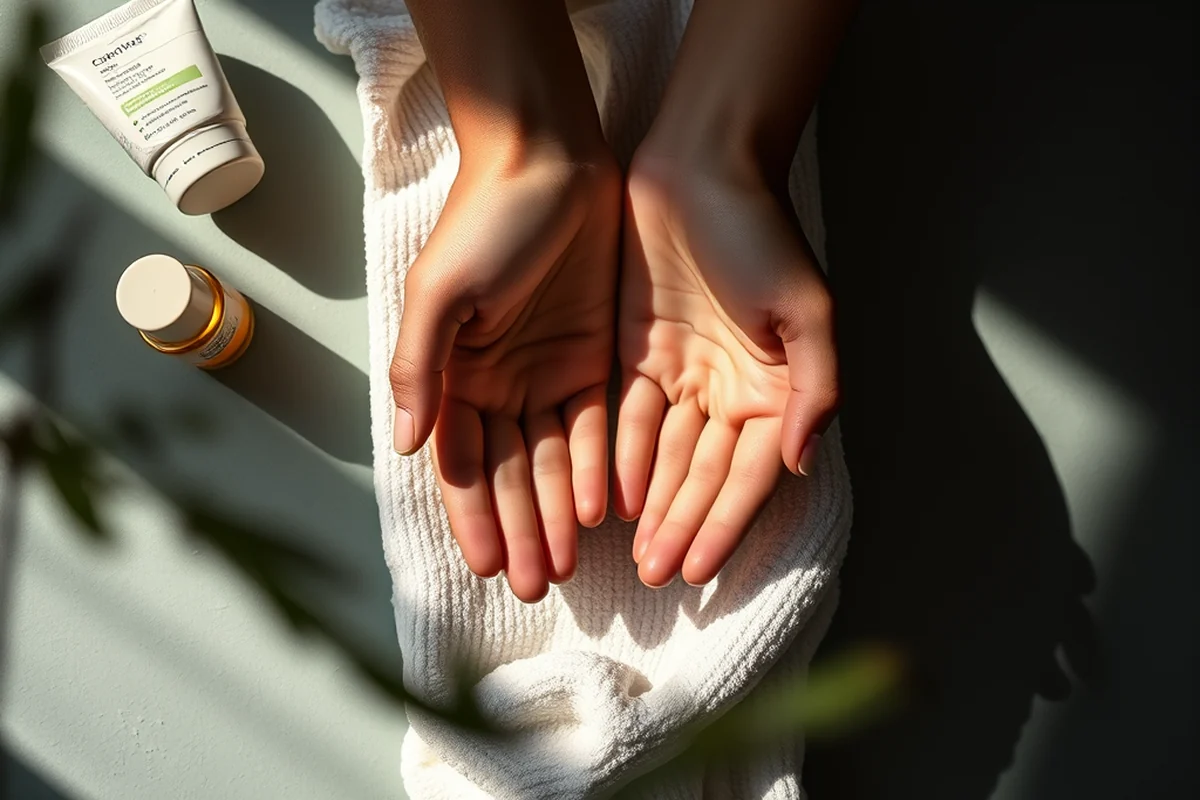
The health of your scalp plays a crucial role in how much your hair grows each month. I used to neglect my scalp, only washing it once or twice a week. Over time, I noticed that my hair felt dry, and my scalp was itchy and flaky. This wasn’t a good sign. I started using a gentle, sulfate-free shampoo and a clarifying scalp treatment once a week, and I saw an improvement in my hair’s texture and growth rate.
A healthy scalp is not just about cleanliness—it’s about balance. I began using a scalp massager to stimulate blood flow and noticed that my hair seemed more vibrant. Blood flow to the scalp can help deliver essential nutrients to the hair follicles, supporting faster and stronger growth.
I also noticed that when I skipped my scalp treatments, my hair growth slowed down. This reinforced the idea that a healthy scalp is a prerequisite for strong, fast-growing hair. It’s not enough to focus only on the hair itself—you have to care for the environment where it grows.
Related: What is best shampoo for frizzy hair
Can Stress Really Slow Hair Growth?
Stress is one of the most overlooked factors that can slow hair growth. I had a period in my life where I was juggling a demanding job and family responsibilities, and I noticed that my hair was growing more slowly than usual. It didn’t seem to matter how much I ate or how much I cared for my hair—it just didn’t grow as fast.
Stress can trigger a condition called telogen effluvium, where a large number of hairs shift into the resting phase. This means that instead of growing, hairs are shedding or entering a period of inactivity. The result is slower growth and even temporary thinning.
I began to prioritize stress management by practicing mindfulness and yoga. Over time, I noticed that my hair growth stabilized, and I felt more in control of my life. Stress management isn’t just good for your mental health—it’s also beneficial for your hair.
Related: What s the best shampoo for hair growth
How Can You Measure Hair Growth at Home?
Measuring your hair growth at home is simple and doesn’t require any special tools. I used a ruler and a marker to measure my hair each week. I marked the spot where my hair started and measured how far it had grown by the next week. This gave me a clear visual indicator of how much my hair was growing in a month.
I also tried using a digital scale that measured the weight of my hair. This was more complicated, but it gave me a different kind of data. I found that the weight of my hair increased slightly over time, which was a good sign that my hair was growing denser and thicker.
I also discovered a smartphone app that used augmented reality to measure hair growth. It was a fun and interactive way to track progress, and it made me more consistent with my measurements. No matter which method you choose, tracking your hair growth can be a powerful way to stay motivated and see results.
Measuring your growth is the first step to understanding it.
Related: What is the best hair care products
How Long Does It Take to See Hair Growth Results?
If you’re looking to see measurable results from your hair care routine, you’ll likely need to be patient. I noticed that after the first month, there wasn’t much change. But by the fourth month, I saw a visible difference in the length and health of my hair.
Hair growth is a slow process, and it takes time for the changes to become noticeable. I kept a journal of my hair care routine and noticed that after four months of consistent care, including proper nutrition, stress management. The use of hair-boosting products, my hair had grown by about two inches.
It’s important to stay consistent with your routine. Hair growth is not an overnight transformation—it’s a gradual process that requires dedication and patience. But the results are worth it.
🧴 Sensitive Scalp Care
If you have a sensitive scalp, focus on using gentle, fragrance-free products to avoid irritation.
💰 Budget-Friendly Hair Growth
Use affordable, drugstore products like biotin supplements and sulfate-free shampoos to support hair growth on a budget.
🧼 Minimalist Hair Routine
Keep your routine simple with just a few key products: a good shampoo, conditioner, and a weekly scalp treatment.
🎯 Targeted Hair Growth
Use targeted products like hair serums and scalp treatments to focus your efforts on areas where you want your hair to grow.
✨ Maintenance Hair Care
Once your hair has grown, maintain its health with regular trims, deep conditioning, and a consistent care routine.
| The mistake | Why it happens | The fix |
|---|---|---|
| Using harsh chemicals on the hair or scalp. | Harsh chemicals can damage the hair shaft and scalp, leading to slower growth or even hair loss. | Choose sulfate-free and fragrance-free products that are gentle on the hair and scalp. |
| Neglecting the scalp’s health. | Ignoring the scalp can lead to dandruff, dryness, and poor hair growth. | Use a gentle cleanser and a hydrating scalp treatment once a week to keep the scalp healthy. |
| Not drinking enough water. | Dehydration can lead to dry, brittle hair and slower growth. | Drink at least 8 glasses of water a day to support healthy hair growth. |
| Overusing heat styling tools. | Excessive heat can damage hair and slow down the growth process. | Limit the use of heat tools and always use a heat protectant when styling. |
How Much Does Hair Grow In A Month
Common Questions
How long does it take for hair to grow back after a haircut?
Can hair growth be accelerated with specific products?
Is there a difference in hair growth between men and women?
Does cutting your hair more often make it grow faster?
References
- How does hair grow? | Ask Dr. Universe - Washington State University (askdruniverse.wsu.edu)
- ATSDR Hair Analysis Panel Discussion: Section 2.4 (atsdr.cdc.gov)
- How Often Should You Trim the Sides of a Short Sides Long Top ... (blogs.wellesley.edu)
- Hair Growth - EdTech Books (books.byui.edu)
- Dealing with Hair Growth | Sexual Medicine (bumc.bu.edu)
Cite this guide
Natural Hair Tying Techniques (2026). How Much Does Hair Grow In A Month. https://knotgrow.com/how-much-does-hair-grow-in-a-month/
Feel free to cite or share this guide.